Scrolling Yourself Into Doubt: How Your Own Highlight Reel Is Quietly Wrecking You
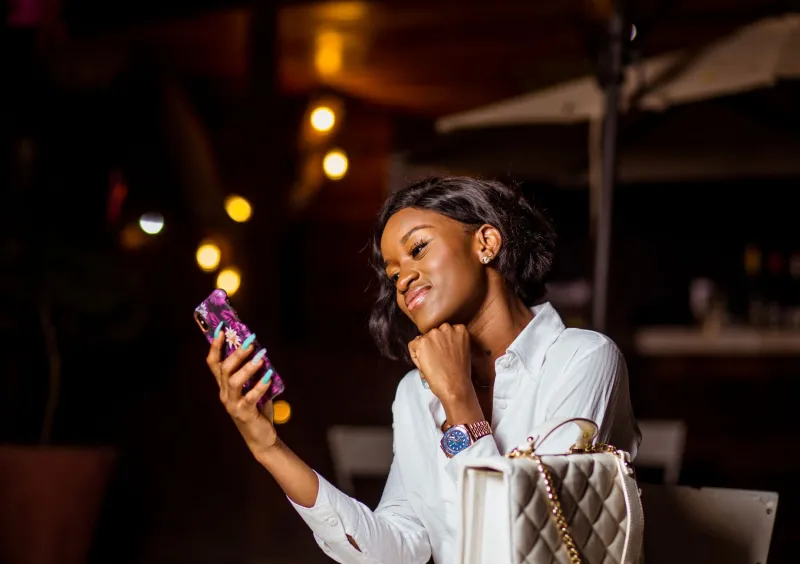
Here's something nobody talks about at the branding workshops: the most dangerous person to compare yourself to might not be the creator you're jealous of. It might be the version of yourself you've been carefully constructing online.
We know — intellectually — that what we post is the greatest hits. The good lighting. The finished thing. The caption we rewrote four times. But knowing that doesn't stop the feeling when you're mid-project, stuck, tired, and you scroll back through your own feed and think: why can't I just be that person all the time?
That's the trap. And it's one we built ourselves.
The Curated Self Is a Moving Target
Social media didn't invent comparison. Humans have been measuring themselves against each other since forever — it's baked into our psychology. What platforms changed is the density and speed of that comparison, and the fact that we now curate our own image with enough precision that even we can't live up to it.
Psychologists call this "social comparison theory," and it's been studied since the 1950s. The basic idea: we determine our own social and personal worth based on how we stack up against others. The problem is that online, we're never comparing apples to apples. We're comparing our raw Tuesday afternoon to someone else's best moment from six months ago that they just reposted.
And when that "someone else" is you? It gets even messier.
You start chasing a version of yourself that was already a performance. You're not falling behind a real standard — you're falling behind a fiction. And creative confidence doesn't survive that kind of math for long.
Why Creative People Are Especially Vulnerable
If you're a writer, designer, filmmaker, musician, or any flavor of maker, you already live with a baseline level of self-doubt. That's not a character flaw — it's part of the process. The gap between what you can envision and what you can currently execute is literally what drives you to get better.
But comparison culture exploits that gap. It takes the very thing that makes you grow and weaponizes it.
When you see another creator's polished output and compare it to your messy draft, your brain doesn't register that you're looking at two completely different stages of two completely different processes. It just registers: theirs is better than mine. Over time, that story compounds. You start making smaller bets. You second-guess the ideas that actually excite you. You start optimizing for what looks good instead of what feels true.
That's not growth. That's erosion.
The Metrics That Actually Matter
Here's a reframe worth sitting with: external benchmarks — follower counts, engagement rates, how many people shared your last post — measure reach, not creative development. Those are two very different things, and conflating them is where most creators lose the plot.
So what does creative progress actually look like? A few honest markers:
You're taking risks you weren't taking six months ago. Not bigger risks for the sake of optics — risks that genuinely scare you because they're closer to what you actually want to say.
Your relationship to your process is changing. Not necessarily getting easier, but becoming more familiar. You know your own patterns better. You know what a stuck day feels like versus a dead-end idea.
You're less dependent on the response. Not indifferent to it — caring about your audience is healthy — but less defined by it. The work has value before anyone else sees it.
None of these show up on a grid. None of them go viral. But they are the actual substance of a creative career.
Practical Ways to Recalibrate
Okay, so knowing comparison is a trap is one thing. Actually stepping out of it is another. Here's what works:
Do a feed audit — including your own. Unfollow accounts that consistently make you feel behind, even if you admire the work. And take a break from scrolling your own archive when you're in the middle of something new. Your old work is context, not competition.
Keep a process journal, not just a portfolio. Document the ugly middle — the drafts, the pivots, the days where nothing clicked. This gives you a real record of your development instead of a highlight reel you'll eventually feel inadequate against.
Set internal benchmarks. Before you start a project, write down what you want to get out of it. Not what you want others to say about it — what you want to discover, practice, or push. Then evaluate it against those goals when you're done.
Create something you won't post. Seriously. Make something just for you, with zero intention of sharing it. This is one of the fastest ways to remember what it feels like to create without an audience — and to remember that you can.
You Are Not Your Feed
Your curated online presence is a tool, not a truth. It's a useful, strategic, sometimes beautiful representation of your work — but it is not the full story of who you are as a creator. The moment you start mistaking the highlight reel for the reality, you've handed your confidence over to a performance.
The most sustainable creative life isn't the one that looks the most consistent online. It's the one that keeps you curious, honest, and making things that matter to you — even when, especially when, nobody's watching.
Scroll less. Make more. And maybe cut yourself the same slack you'd give any other creator whose messy middle you never got to see.